
For 15 years, visitors to Hidden Pond Nature Center were greeted by a prehistoric presence — a powerful shell, a steady gaze and a species that has walked, and swum, the Earth for millions of years.
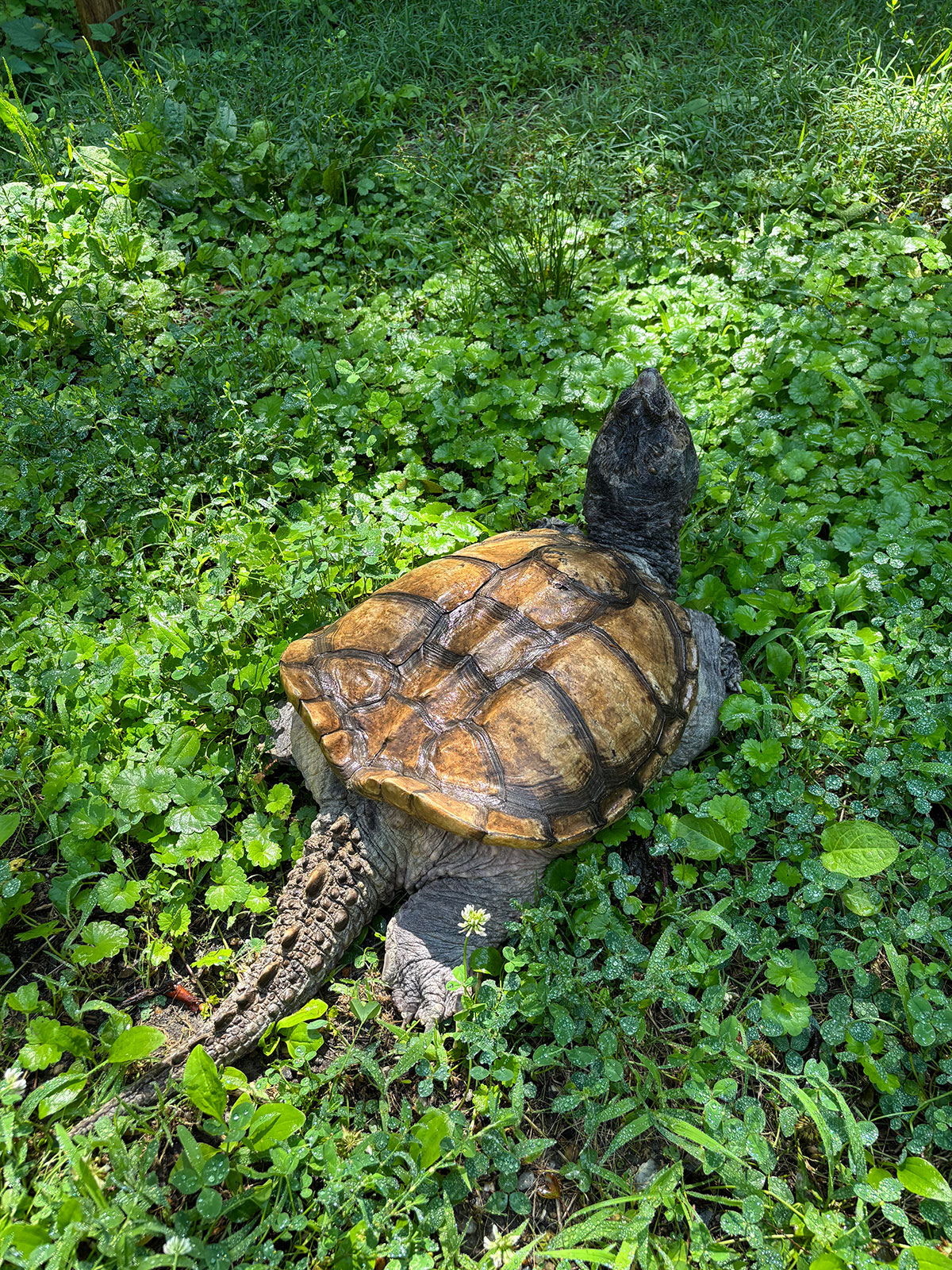
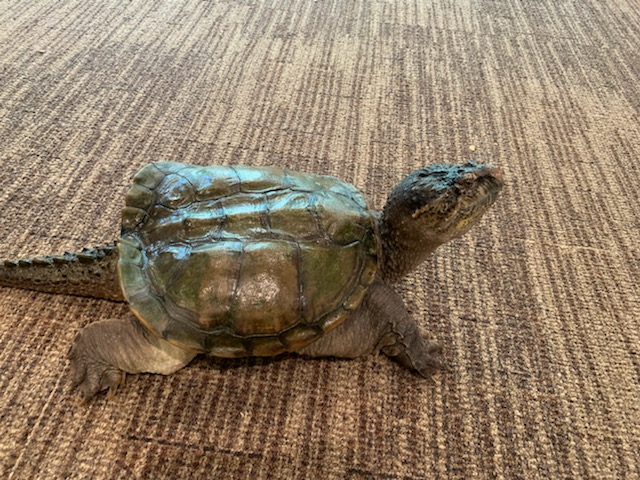
Fluffy, Hidden Pond’s beloved snapping turtle, recently passed away at the age of 25.
While it is always difficult to say goodbye to an animal who becomes part of a park’s identity, Fluffy’s story is one of resilience, education and quiet impact.
A Living Piece of Virginia’s Wild
North American snapping turtles (Chelydra serpentina) are often described as “living dinosaurs.” With rugged, serrated shells, strong hooked jaws and tails nearly as long as their shells, they look like relics from another era. In reality, they are an essential and enduring part of Virginia’s waterways.
Snapping turtles live across the state. They have been found in 91 counties and 20 cities. They thrive in ponds, lakes, rivers and marshes. As both predator and scavenger, they help keep aquatic ecosystems in balance by eating fish, crayfish, amphibians and even aquatic plants.
Fluffy represented that wild Virginia story inside the walls of Hidden Pond Nature Center.
Built to Last
Snapping turtles are among the largest freshwater turtles in North America. Adults commonly measure 8 to 14 inches in shell length and weigh 10 to 35 pounds. Virginia’s record snapping turtle weighed more than 57 pounds.
In the wild, snapping turtles may live 20 to 30 years. Many never reach that age because of habitat loss, nest predators and busy roads. Reaching 25 years is a long life for a snapping turtle — and Fluffy spent much of that time serving as an ambassador for his species.
Since arriving at Hidden Pond in 2010, he helped visitors see beyond the myths.
Changing Minds About Reptiles
Snapping turtles are often misunderstood. On land, they can be defensive and quick to bite if they feel threatened. In water, however, they are much calmer and focused on finding food and moving through their home.
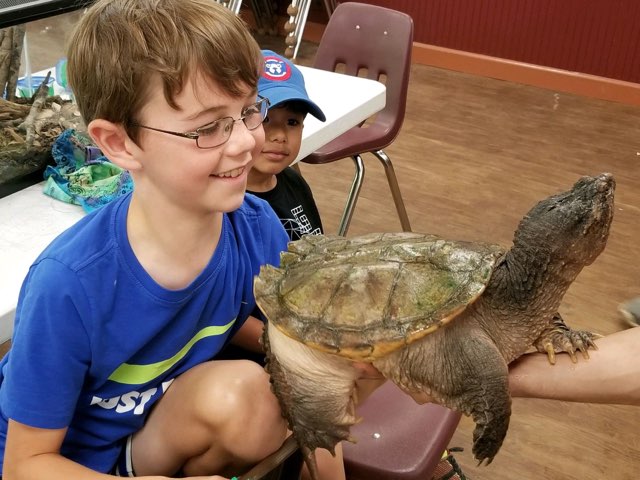
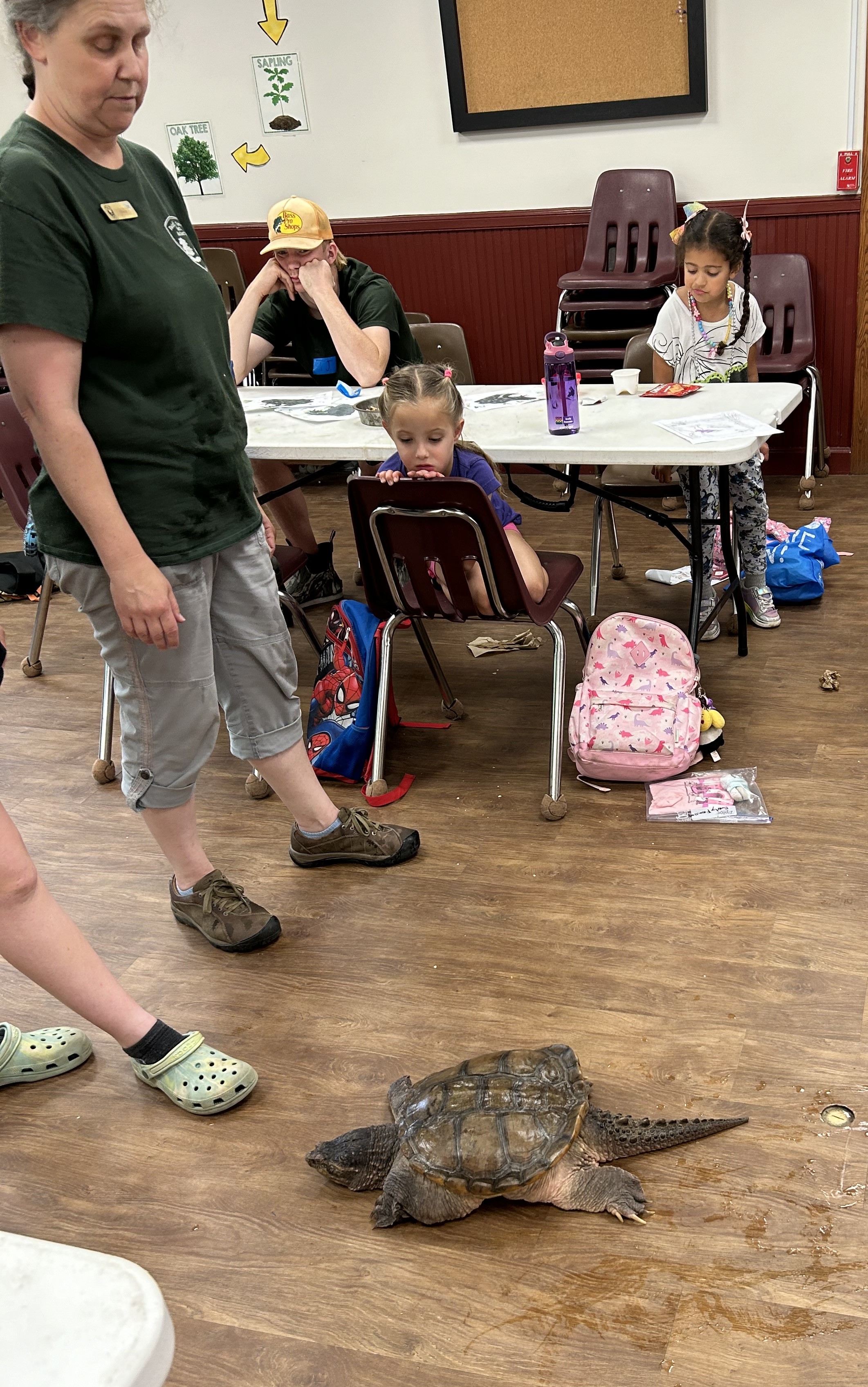
Through school programs, weekend exhibits and countless family visits, Fluffy gave generations of children and adults a chance to see this remarkable species up close. For many, he was their first encounter with a turtle large enough to inspire both caution and respect.
He helped start conversations about wetlands, watersheds and living alongside wildlife. He helped children see that reptiles are not “scary,” but vital parts of healthy ecosystems.
David, a longtime staff member who started as a youth volunteer, said:
“Fluffy ate seven and a half bluegills in one sitting one time that I can remember, and I appreciated his commitment to controlling introduced species in that moment (not to mention all the Louisiana red crayfish he downed as well). I loved when people instinctively compared him to a dinosaur because I think seeing an animal like him in person is a good reminder of how old and strange this world is. That’s an interpretive tool he had that I could only hope to master. May he be well-survived by his distant kinfolk in the pond.”
It is impossible to know how many visitors met Fluffy over 15 years, but the number is likely in the thousands. Each encounter built understanding — and often, a sense of wonder.
A Legacy of Care
In recent months, as Fluffy’s health declined, he received veterinary care and was slowly removed from public exhibit. Following recommendations from licensed veterinarians, staff made the difficult decision to humanely euthanize him.
That decision reflects what defined his time at Hidden Pond: thoughtful, dedicated care.
From a hatchling that once weighed less than half an ounce to a mature turtle weighing many pounds, snapping turtles are built to survive. Fluffy’s 25 years reflect not only the resilience of his species but also the commitment of the staff and volunteers who cared for him.
More Than a Turtle
Fluffy was more than an exhibit animal. He was part of camp memories. Part of field trips. Part of spontaneous “wow” moments in front of the tank.
He helped visitors connect with a species that has survived for millions of years and continues to play a critical role in Virginia’s ecosystems.
For 15 years at Hidden Pond, one snapping turtle quietly helped shape how our community understands wetlands and wildlife.
We are grateful for the life he lived, the lessons he shared and the legacy he leaves behind.
 Our Stories and Perspectives