
Given its proximity to Washington D.C. and venerable institutions like the Smithsonian, Fairfax County has long been studied by experts in scientific fields like botany and zoology. As a result, we know exactly which species occur within the county… right?
Despite the wealth of data available to us, there are still many unknowns regarding the presence and distribution of certain species across our landscape.
To help fill in these data gaps, the FCPA Natural Resources Branch has been directing biological inventories to document species that occur within county parks. This work is being conducted by both FCPA ecologists and zoologists with the Virginia Natural Heritage Program.
Current survey work is being conducted for several taxonomic groups including bats, reptiles, amphibians, invertebrates, and plants. Already, these efforts have documented numerous rare species and have even discovered new species for both Fairfax County and the Commonwealth of Virginia.
The following includes some of the records observed in 2023:
BATS
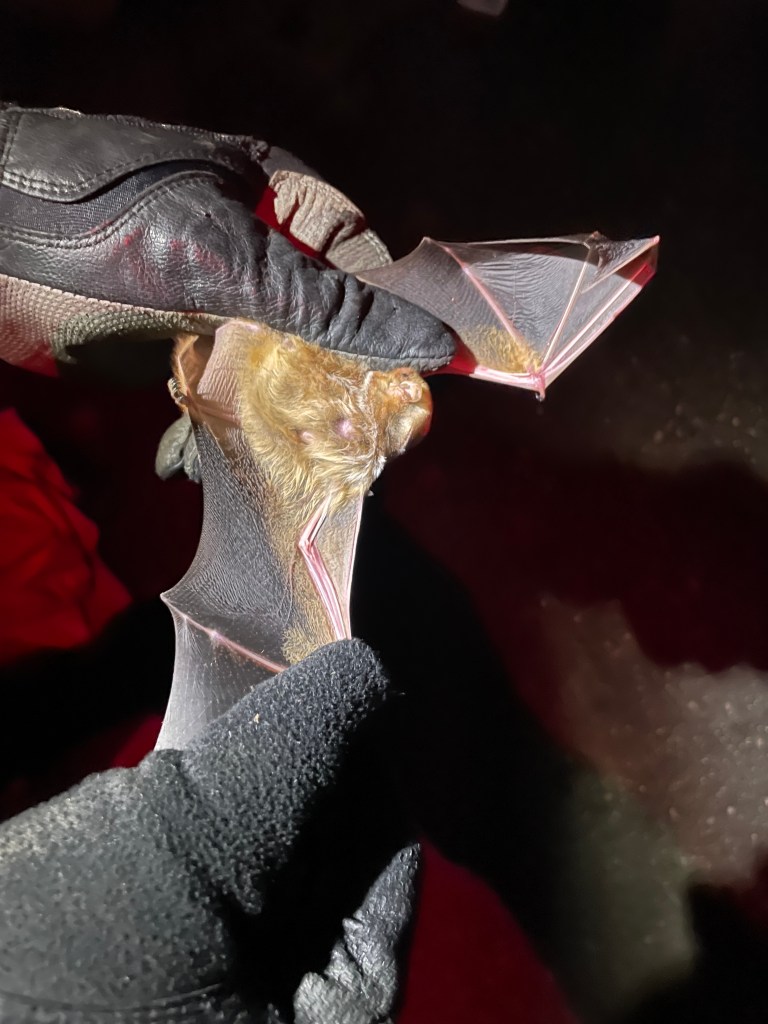
FCPA uses two methods to survey for bats. The first method involves acoustic surveys, whereby a stationary recording device captures the high-pitched calls of bats flying overhead. These recordings can then be analyzed to determine which bat species likely produced the call. However, since some recordings may not produce conclusive results, mist-netting is also used to confirm species presence. For this second method, large, light-weight nets are deployed to physically capture bats. Once a bat is captured, researchers can make a reliable identification and collect data regarding its age, gender, weight, and wingspan before releasing it back into the sky.
Mist-netting events in 2023 yielded two notable finds. First, a female Tricolored Bat (Perimyotis subflavus) was captured in the southern part of the county. This species is listed as Endangered in Virginia and is proposed as Endangered at the Federal level. Additionally, staff caught two Hoary Bats (Lasiurus cinereus), the largest bat species in the Mid-Atlantic. Both individuals were juveniles, suggesting that the species is breeding locally and not just migratory in Virginia as previously thought.
REPTILES
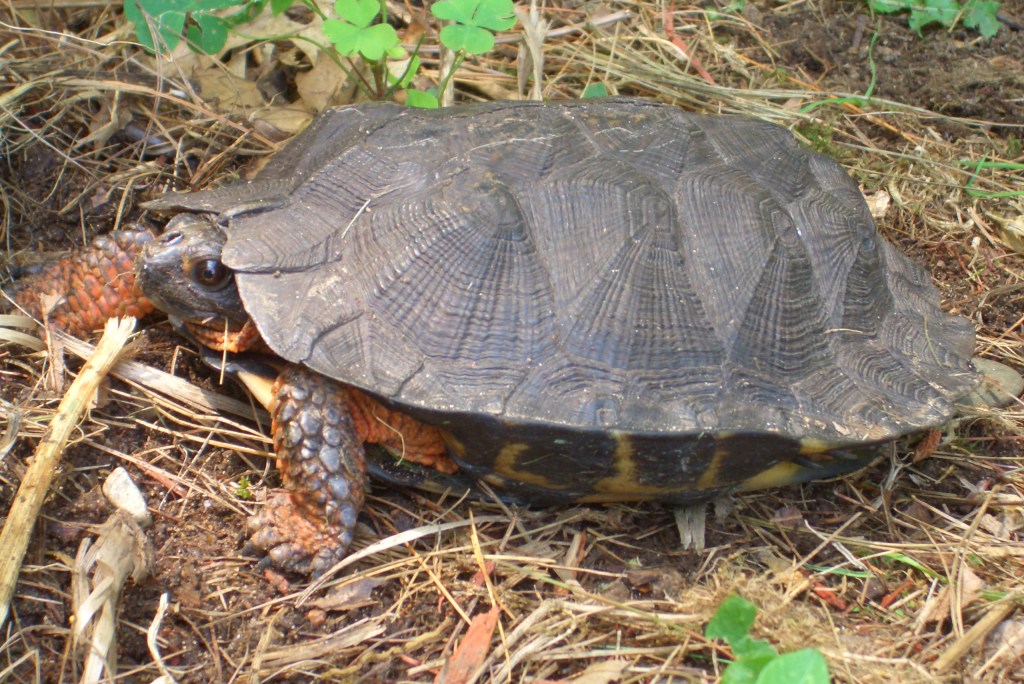
Both traditional and molecular techniques are being to used to survey for Wood turtles (Glyptemys insculpta) which are listed as Threatened in Virginia. First, FCPA ecologists have been conducting traditional visual surveys which involve searching suitable streams at the right time of year. Second, FCPA has contracted with the Smithsonian to conduct eDNA surveys, whereby samples of stream water are collected and processed to determine whether fragments of Wood Turtle DNA may be present. These survey methods have already identified several locations where the species was not previously known.
AMPHIBIANS
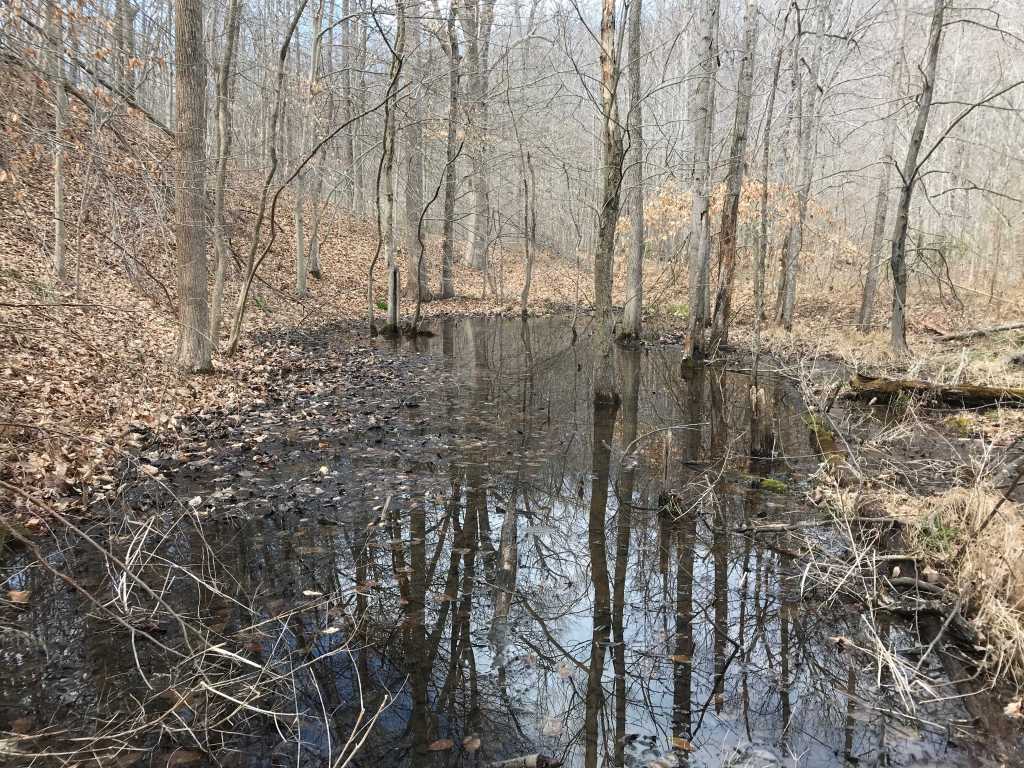
To help survey for amphibian populations, FCPA partnered with the University of Vermont in 2017 to create a model that predicted the location of vernal pools across Fairfax County. Over the past few years, staff have been ground-truthing the model and collecting data on the presence of vernal pool obligate species like Marbled Salamanders (Ambystoma opacum) and Wood Frogs (Lithobates sylvaticus). In 2023, over 20 vernal pools with obligate species were documented despite dry conditions in the spring.
INVERTEBRATES
There are many different methods to sample invertebrate communities. Some of the techniques used on park properties have included malaise traps, bee bowl traps, light traps, and aerial netting – among others.
Some notable observations for 2023 include the Yellow Bumble Bee (Bombus fervidus) and Splendid Tiger Beetle (Cicindela splendida) which are both on Virginia’s Animal Watch List. Additionally, staff encountered a large colony of Mound-building Swamp Ants (Lasius minutus) which have only been documented in Virginia once before. The first collection was made in 1955 by the famed ecologist, E.O. Wilson.
PLANTS
Plant inventories are conducted as part of the Natural Vegetation Community Classification (NVCC) project which aims to map natural community types across all FCPA properties. The methodology used for this project allows for the creation of comprehensive plant lists for each completed park.

Botanical field work conducted in 2023 documented new occurrences of several rare plant species. These include Dwarf Bulrush (Cyperus subquarrosus) and River Bulrush (Bolboschoenus fluviatilis) which are listed as Imperiled in Virginia, along with both Bog Stitchwort (Stellaria alsine) and Lakeshore Sedge (Carex lacustris) which are listed as Critically Imperiled.
Surveys also documented Nuttall’s Milkwort (Polygala nuttallii) which has not been reported from Fairfax County previously. Clustered Beaksedge (Rhyncosphora glomerata) was also found. Though not a county record, the last known collection in Fairfax Co. was made in 1876.
Biological inventories are important to help FCPA and its partners determine where species occur across our local landscape. The data they provide is helpful to biologists, but it is also particularly valuable for planning purposes within the County. Once rare or uncommon species have been documented, efforts can be made to protect or preserve these special resources for future generations.
Contributed by:
Nelson DeBarros
Vegetation Ecologist
Natural Resources Branch, Fairfax County Park Authority
 Our Stories and Perspectives